
Solid Wood vs. Veneered MDF – What’s the Best Choice for Your Furniture?
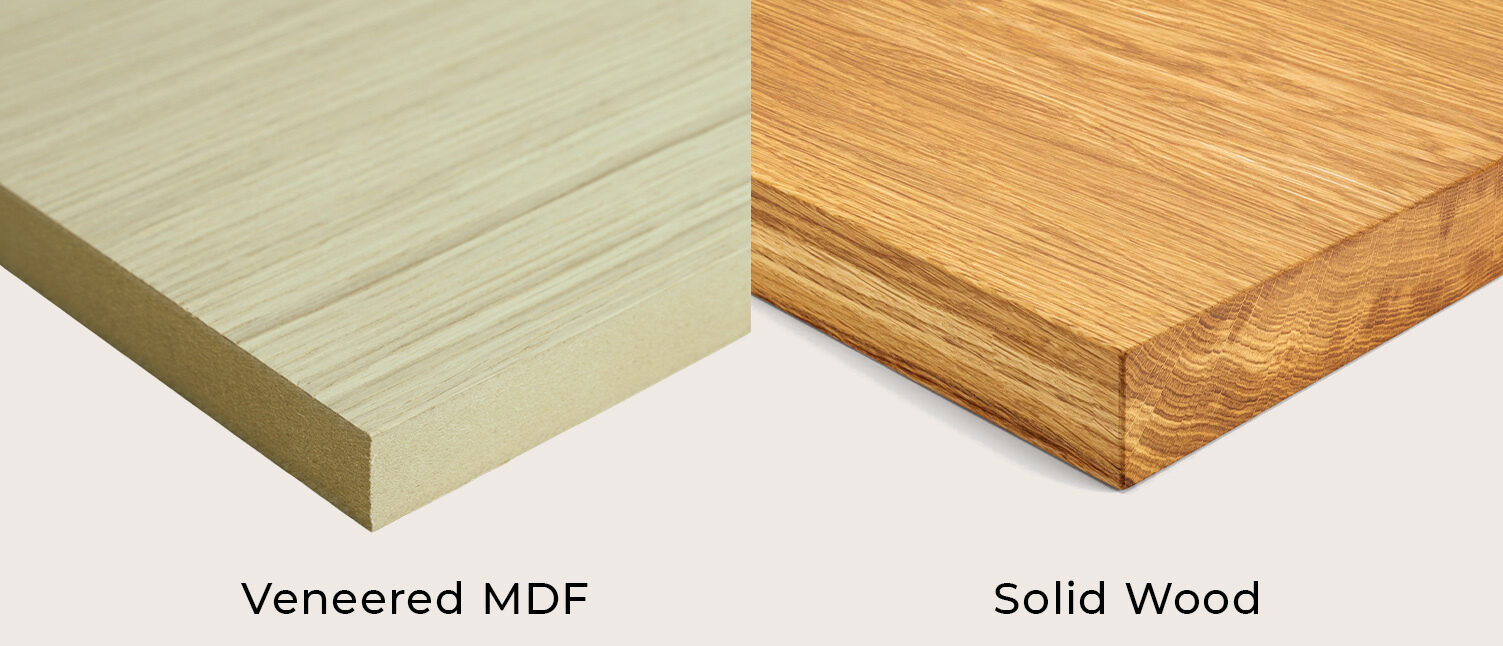
When planning custom furniture for your home or business, one of the most common questions is:
Should I choose solid wood or veneered MDF?
At first glance, they can look almost identical. But inside, they’re very different materials — and understanding that difference can help you make a smarter long-term decision.
Let’s break it down in a simple way.
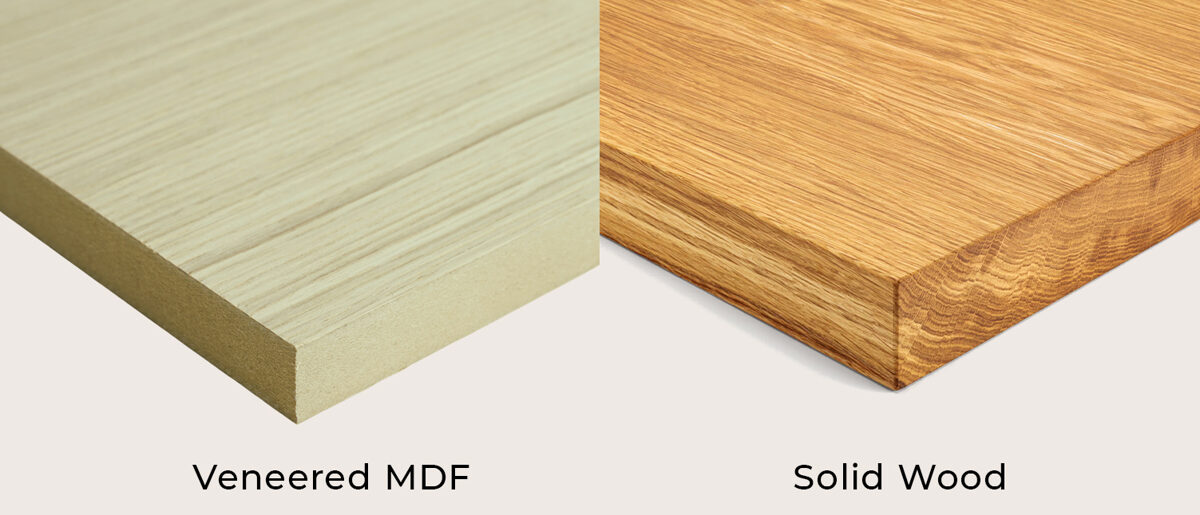
When planning custom furniture for your home or business, one of the most common questions is:
Should I choose solid wood or veneered MDF?
At first glance, they can look almost identical. But inside, they’re very different materials — and understanding that difference can help you make a smarter long-term decision.
Let’s break it down in a simple way.
What Is Solid Wood Furniture?
Solid wood furniture is made from natural timber — oak, ash, walnut, birch and other hardwoods. It’s authentic, strong, and full of character.
Each piece of wood has its own grain, texture, and personality. No two panels are ever exactly the same — and that’s part of the beauty.
Why people love solid wood:
-
Natural and premium feel
-
Extremely durable
-
Can be sanded and refinished over time
-
Ages beautifully
Solid wood is often used in high-end furniture, dining tables, shelves, and visible design elements where the material itself becomes part of the interior story.
But it’s important to know — wood is alive. It reacts to humidity and temperature changes. That means it can expand or contract slightly over time. With proper construction and craftsmanship, this is controlled — but it’s always part of working with natural materials.
What Is Veneered MDF?
Veneered MDF is an engineered material with a stable MDF core and a thin layer of real wood veneer on top.
From the outside, it looks like solid wood — because the surface is real wood.
The difference is in the structure.
Why veneered MDF is popular in modern furniture:
-
More cost-efficient
-
Very stable (less movement from humidity)
-
Perfectly smooth surface
-
Ideal for large panels and built-in cabinetry
In bespoke furniture and modern interior design, veneered MDF is often the smarter structural choice for wardrobes, wall units, and cabinetry where stability matters most.
Durability: Which One Lasts Longer?
Both materials can last for decades when properly made.
-
Solid wood furniture is incredibly strong and can be restored multiple times.
-
Veneered MDF furniture offers better dimensional stability, especially for wide, flat surfaces.
For large built-in systems or modern wall panels, veneered MDF often performs better structurally. For tabletops or statement pieces, solid wood brings unmatched authenticity.
Aesthetic Differences
This is where personal taste comes in.
Solid wood:
-
More natural variation
-
Deeper grain expression
-
Organic imperfections
Veneered MDF:
-
More uniform look
-
Cleaner lines
-
Consistent finish
In contemporary interior design, many projects combine both materials to achieve the best balance between beauty and performance.
Cost and Practicality
If budget is an important factor, veneered MDF usually offers a more affordable solution while still delivering a real wood finish.
Solid wood costs more due to:
-
Material price
-
Processing time
-
Craftsmanship involved
For many custom furniture projects, the smartest approach is not choosing one over the other — but combining them strategically.
So, Which One Should You Choose?
Choose solid wood if:
-
You want premium, long-term value
-
The furniture will handle heavy daily use
-
Natural character is important
Choose veneered MDF if:
-
You need stability for large surfaces
-
Budget matters
-
You prefer a clean, modern look
Final Thoughts
There is no universal “better” material. The right choice depends on your project, interior style, budget, and expectations.
When designed and manufactured properly, both solid wood furniture and veneered MDF furniture can look beautiful and last for years.
If you’re planning custom-made furniture and want to understand what works best for your space — getting professional guidance can save time, money, and future repairs.